Source Hammer Cement Brick Crusher for Mining, Quarry, Construction
Compare 30 hammer cement brick crusher options from verified suppliers. These machines feature high productivity, customizable colors, and are designed for mining, quarrying, and construction applications with varying feeding sizes and motor powers; compare the available evidence and request quotations based on your requirements.
Key considerations
Products List


Comprehensive Sourcing Guide
Hammer Cement Brick Crusher Sourcing Guide
Buyers evaluating hammer cement brick crushers must first distinguish between primary jaw crushing and secondary hammer milling stages, as the supplied data indicates specific models like the PC and LZHX series are designed for limestone grinding and stone crushing applications. The observed product attributes reveal a functional range from primary jaw crushers to hammer crushers, with inlet sizes varying significantly from 150×250mm to larger capacities, requiring precise alignment with your specific feed material size and desired output granularity.
Procurement decisions should prioritize the core component configuration, specifically the engine and motor power ratings which range from 11kw to 75kw in the observed listings, directly influencing the machine's ability to handle high-productivity demands in mining and stone processing environments. Since the maximum feeding size can extend up to 800mm while outlet sizes vary between 18-48mm depending on the model, buyers must verify that the selected unit matches their specific feedstock dimensions to avoid operational bottlenecks or excessive wear on the hammer components.
Product Scope and Observed Listing Signals
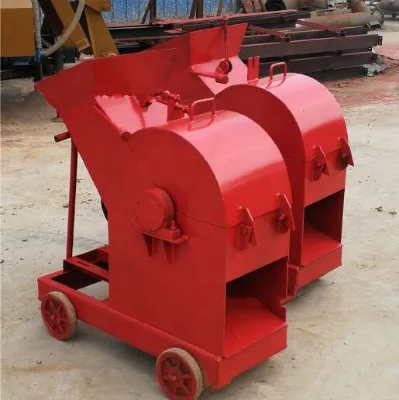
The market listings for these machines demonstrate a wide variance in weight and capacity, with some units weighing as little as 130kg while others reach 0.8 tons, suggesting a spectrum of portable to stationary industrial configurations. The observed selling units are typically single items, and the customization options allow for specific color requests and packing methods ranging from nude packing to wooden cases, which buyers should evaluate based on their logistical constraints and site-specific installation requirements.
Buyers must carefully interpret the "Used for" and "Application" fields, which explicitly mention primary jaw crushers, mining, and mine operations, indicating that these machines are engineered for heavy-duty stone reduction rather than light-duty material handling. The presence of "High Productivity" as a key selling point alongside specific motor types like AC motors suggests that these units are optimized for continuous operation in demanding environments, necessitating a thorough review of the specific model's throughput capabilities against your production targets.
Technical Specifications to Verify
Verification of the inlet and outlet dimensions is critical, as the data shows inlet sizes as small as 150×250mm and outlet sizes ranging from 18-48mm, which directly dictates the particle size distribution of the final crushed product. Buyers should confirm the maximum feeding size, which can reach up to 800mm in certain models, to ensure compatibility with their existing feed systems and to prevent blockages that could damage the internal hammer mechanism or reduce overall efficiency.
The motor power and speed specifications vary significantly across the observed listings, with power ratings from 11kw to 75kw and speeds around 1450 R/Min, requiring buyers to match these metrics to their power supply infrastructure and desired processing rates. Since the output size is noted as "Depending on Model" and capacity ranges from 3-10tph to 30-70tph, purchasers must request detailed performance curves for the specific model to validate that the machine can sustain the required tonnage without excessive energy consumption or premature component failure.
Compliance and Safety Documentation
While the observed data lists ISO and CE certifications, buyers must treat these as observations rather than guaranteed attributes for every listed unit, requiring direct verification of the specific certificate validity and scope for the model being purchased. The presence of a machinery test report is noted as "Provided" in some listings, which serves as a crucial document for validating that the machine meets safety and performance standards before it leaves the manufacturing facility in Henan or Jiangxi, China.
Safety documentation should also include a detailed review of the warranty terms, which are observed to be 1.5 years, and the after-sales service commitments that range from "The whole using life" to specific supply guarantees. Buyers must ensure that the supplier provides clear documentation on the spare parts supply chain, specifically the "longlift supply" promise, to mitigate the risk of operational downtime caused by the unavailability of critical wear parts like hammers or bearings in remote mining locations.
Cost Drivers and Commercial Terms
The pricing structure for these crushers is listed as "negotiation," indicating that the final cost is heavily influenced by the specific model configuration, motor power, and customization requests such as color or packing type. Buyers should anticipate that the cost will scale with the machine's weight and capacity, as heavier units with higher motor power ratings like the 75kw models will command a premium over lighter, lower-power variants designed for smaller-scale operations.
Commercial terms must explicitly address the lead time and shipping logistics, as the observed data does not provide fixed lead times or shipping costs, leaving these variables open to negotiation. The "Selling Units" being single items suggests that buyers should clarify whether the quoted price includes installation guidance, training, or just the physical delivery of the machine, as these factors can significantly impact the total cost of ownership and the timeline for commissioning the equipment.
Supplier Qualification and Quality Control
Supplier qualification should focus on verifying the place of origin, which is listed as Henan or Jiangxi, China, regions known for heavy machinery manufacturing but requiring due diligence on the specific factory's production capacity and quality control processes. Buyers must confirm that the "Condition" is strictly "New" and that the materials used, such as carbon steel, meet the durability requirements for the intended application, as the quality of the raw materials directly impacts the lifespan of the crusher.
Quality control protocols must include a review of the machinery test report and the standard compliance, which is noted as "Depends on model" or specific dimensions like 1500*3000mm, ensuring that the delivered unit matches the agreed-upon specifications. The "After Sale Service" of "Suplly" and "longlift supply" indicates a commitment to long-term support, but buyers should verify the specific response times and the availability of technical experts to ensure that any operational issues can be resolved promptly.
Long-Term Procurement Checks
Long-term procurement success relies on the availability of spare parts and the robustness of the after-sales service, which is described as covering the "whole using life" in some listings but varying in others. Buyers should establish a clear agreement on the supply chain for critical components like the engine and hammers, ensuring that the supplier can provide these parts reliably over the 1.5-year warranty period and beyond to maintain continuous operation.
Finally, buyers must monitor the performance of the machine against the observed specifications, such as the 30-70tph capacity and 1450 R/Min speed, to ensure that the actual output matches the theoretical capabilities. Regular maintenance checks should be scheduled based on the "High Productivity" claims, verifying that the machine continues to operate efficiently and that the wear on the carbon steel components remains within acceptable limits to prevent costly unplanned downtime.
FAQs
What is the typical motor power for a hammer cement brick crusher?
Motor power varies by model, with observed values including 11kw, 15kw, and 75kw. Buyers should match the power rating to their specific throughput requirements and material hardness. Higher power units generally handle larger feed sizes and higher production capacities, ensuring efficient operation for mining or construction applications.
What is the maximum feeding size for these crushers?
The maximum feeding size is typically between 300mm and 800mm, depending on the specific model selected. This range allows the machine to process large raw materials effectively. Buyers should verify the inlet dimensions, such as 150x250mm for smaller units, to ensure compatibility with their upstream material handling equipment.
What materials can a hammer cement brick crusher process?
These crushers are designed to process limestone and other stones used in mining and construction. The carbon steel construction provides durability for abrasive materials. While limestone is a primary application, the machine can handle various hard materials suitable for primary or secondary crushing stages in industrial production lines.
What is the standard warranty period for new units?
The standard warranty period is 1.5 years for new equipment. This coverage typically includes support for core components like the engine. Buyers should review the specific terms to understand what is covered under the warranty and how spare parts supply is managed during the service period.
Can the crusher be customized for specific requirements?
Yes, customization is available for these machines. Buyers can request specific colors, packing methods, or model adjustments to fit their operational needs. The manufacturer supports custom requests, allowing for tailored solutions that align with specific production line configurations or site constraints.
What is the typical output size of the crushed material?
The output size depends on the model, with observed ranges including 18-48mm. This granularity is suitable for producing cement bricks or other construction aggregates. Buyers should specify their desired final particle size to ensure the selected crusher model meets their production specifications.
What is the weight of a standard hammer crusher unit?
Weights vary significantly by model, with observed values ranging from 130kg to 0.8t. Larger industrial units may weigh more depending on the capacity and motor power. Buyers should consider the weight for transportation and installation planning, ensuring their site can support the equipment's mass.